Sketchnoting is a note-taking technique that I learned in my UNIV 1100 Engineered for Success class my first semester at Auburn. I have really been enjoying utilizing it to study and have employed it to great success in ENVD 2040 Design, Innovation, and Society and PHYS 1600 Engineering Physics I.
Sketchnoting is a way to take notes that visualizes and connects ideas.
In this post, I will go over the benefits of sketchnoting, the tools I use, and my process. Additionally, I will examine some of my sketchnotes and try to explain the basics of sketchnoting.
Benefits
Sketchnoting has many benefits. By spending time to make notes that look nice, indicate how ideas are connected, and include visual elements, you more deeply learn the material. Indicating connections and the relationship between ideas through the use of visual elements and hierarchy makes sure that ideas are understood rather than simply memorized. Additionally, these connections require that ideas are understood rather than simply copied. This method ensures that you actually know the material and are analyzing it while taking notes rather than simply copying down words.
Including visual elements such as sketches engages more of the brain than words alone, creating deeper connections. Associating ideas with images is a powerful tool for memorization.
Additionally, sketchnoting creates a final product that is excellent for sharing with others. Sketchnotes are generally aesthetically pleasing which makes them great for sharing with others. The same elements that make sketchnotes great for learning the material make them great for teaching others. (However, I would not rely on sketchnotes made by others as, like with all notes, the process of creating the note greatly helps with learning the material).
Tools
I use an iPad, Apple Pencil, and the CollaNote app to create my sketchnotes. I like CollaNote because it does not have a subscription pricing model. When taking notes digitally, it’s important to not spend too much time making everything look perfect. Just because you can keep erasing and redrawing the same letter to get it perfect, does not mean you should. Additionally, I try to limit my tools and colors so that I don’t spend a lot of time choosing the absolute best color or tool. I have several presets that I try to stick to. I use a grid paper. Generally, I work in dark mode because it is better for my battery life. However, I prefer the look of my notes in light mode. Lately, I have been using a matte screen protector, but I have not decided if I like it or not.
Process
In general, I would take traditional notes during class, typically bullet points. Although sketchnoting can be performed during a lecture, I will need more practice to reach that skill level. At the end of the unit or chapter (depending on the class and amount of content), I would create a sketchnote summarizing this section using my notes, the lecture slides, and the textbook. The process of creating these notes really helped me learn the material as well as being an excellent review resource.
For Design, Invention, and Society, I created summaries of each unit, a group of related chapters. For Engineering Physics I, I created a sketchnote for some of the chapters.
In Design, Invention, and Society, I found that creating sketchnotes was easier since the concepts were more abstract and it was easy to form connections between topics. In Engineering Physics I, my sketchnotes were closer to normal notes in frames. These were still useful, but did not reach the full potential of sketchnoting.
Sketchnotes
Without further ado, here are some of my sketchnotes. You can see some progression in my skills, but I had already gotten decently comfortable with sketchnoting by the time I created these. As I take you through these examples, I also try to explain the basics of sketchnoting.
I have cropped these sketchnotes to remove the unused bottom portion on some, but they are otherwise unmodified.
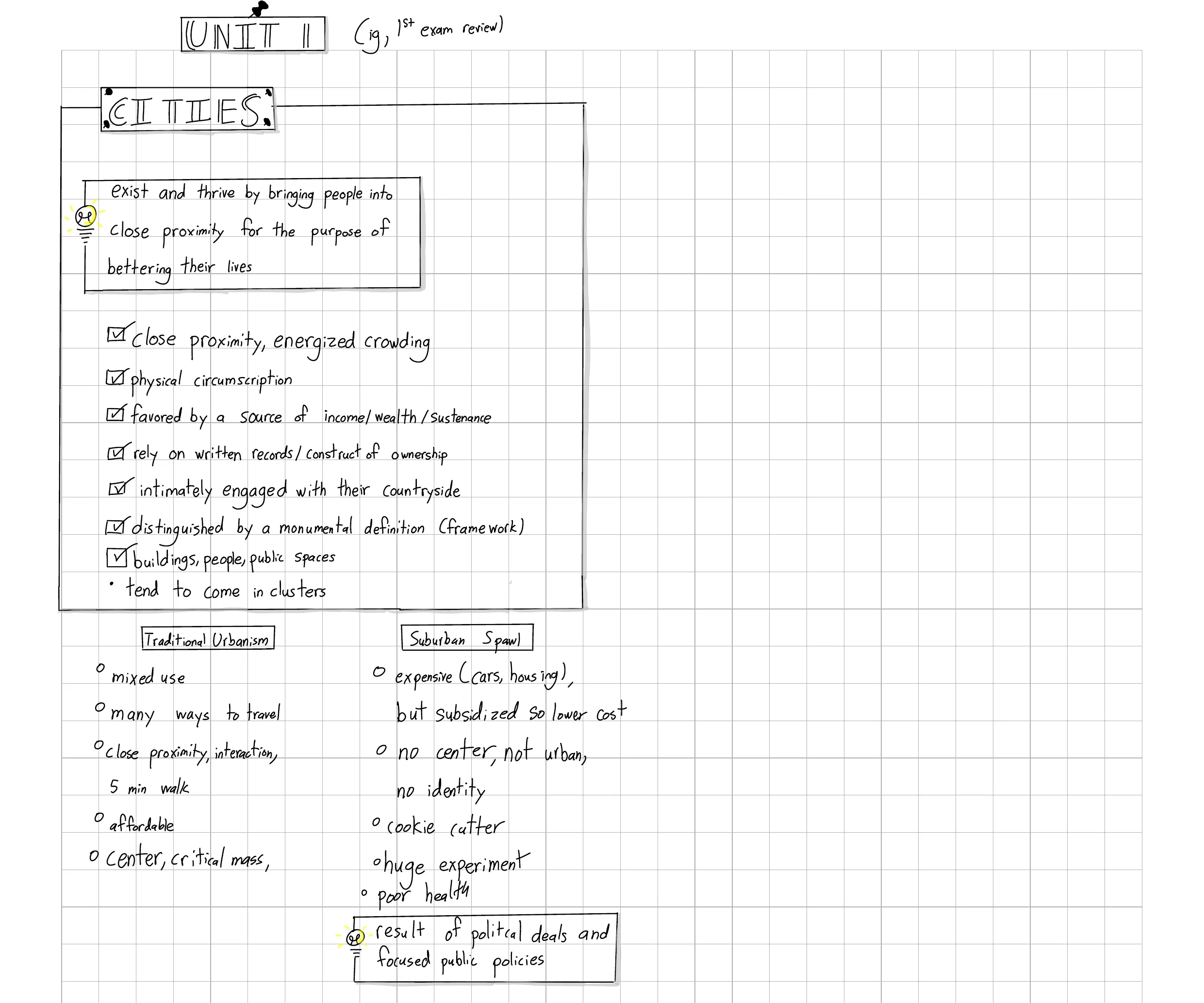
First off, we see two important elements of sketchnoting, lettering and frames. There are several easy ways to mix up letters to create eye catching titles that highlight key topics. Frames are exactly what they sound like. I like to use a standard rectangle with tacks, a cloud, a checkbox (as you can see on the page), and a lightbulb (again seen on the page). The way I use them, is to always have a frame around titles and usually have a frame around the related items. This helps group ideas together. Here I haven’t done an amazing job as this is one of my earlier sketchnotes. These are mostly my regular notes in the sketchnote frames. Additionally, the use of checkboxes helps indicate the requirements defining cities.
Another principle of sketchnoting is the use of color. The use of colors really emphasizes important points.
Combining colors and frames draws attention to key points. The lightbulb frame and yellow highlights indicate key ideas. The same is true for the checkboxes. Here I have only used yellow highlights, but keep an eye out for other colors in the following sketchnotes.
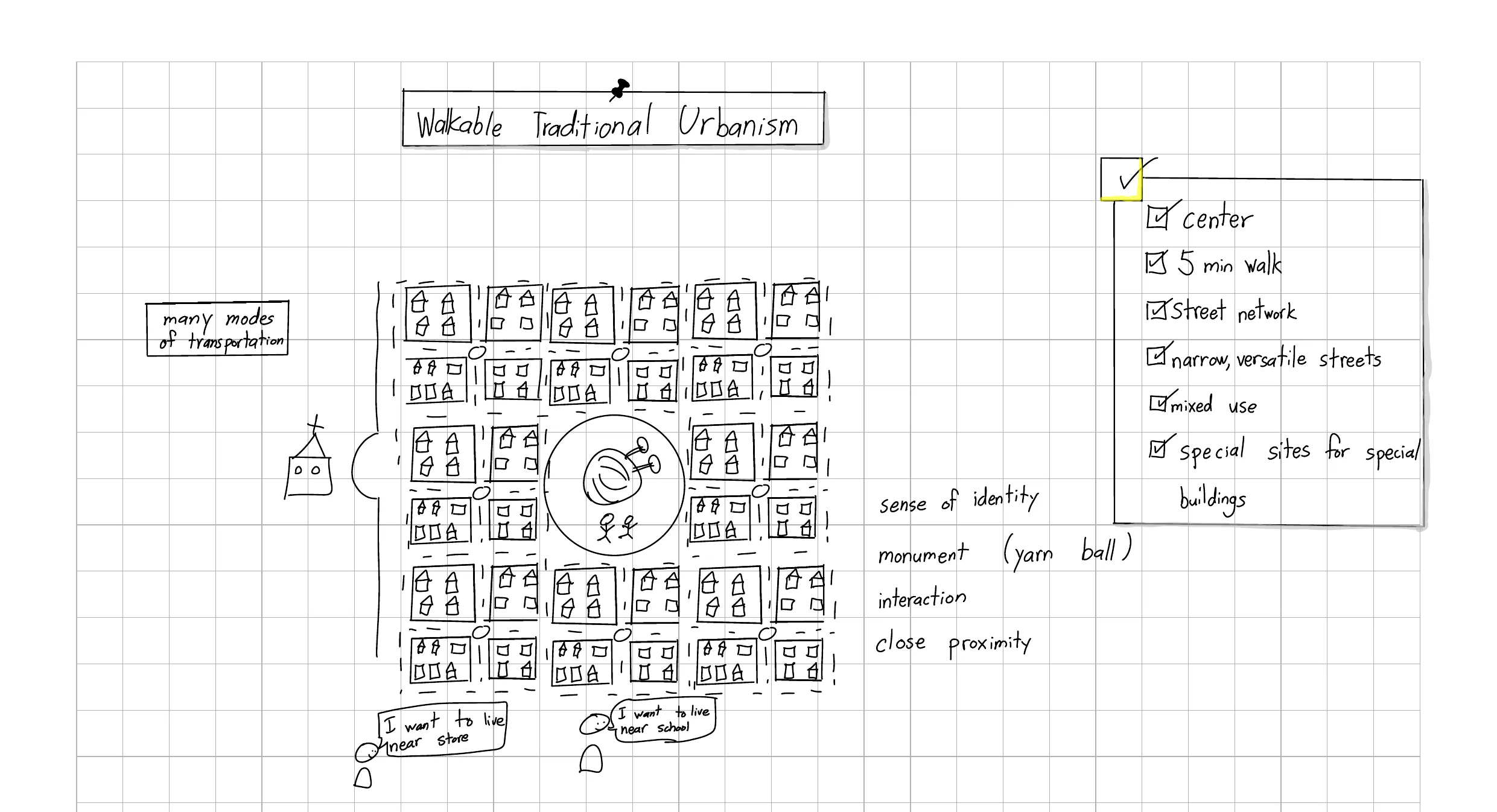
This is a pretty unique sketchnote. I was having a bit of fun with this one. I spend a decent amount of time on the main illustration, incorporating many elements of walkable traditional urbanism. Then, I used the checkbox frame to list those requirements. I also included some people. Generally, I find it hard to organically incorporate people into my sketchnotes, but here they fit well.
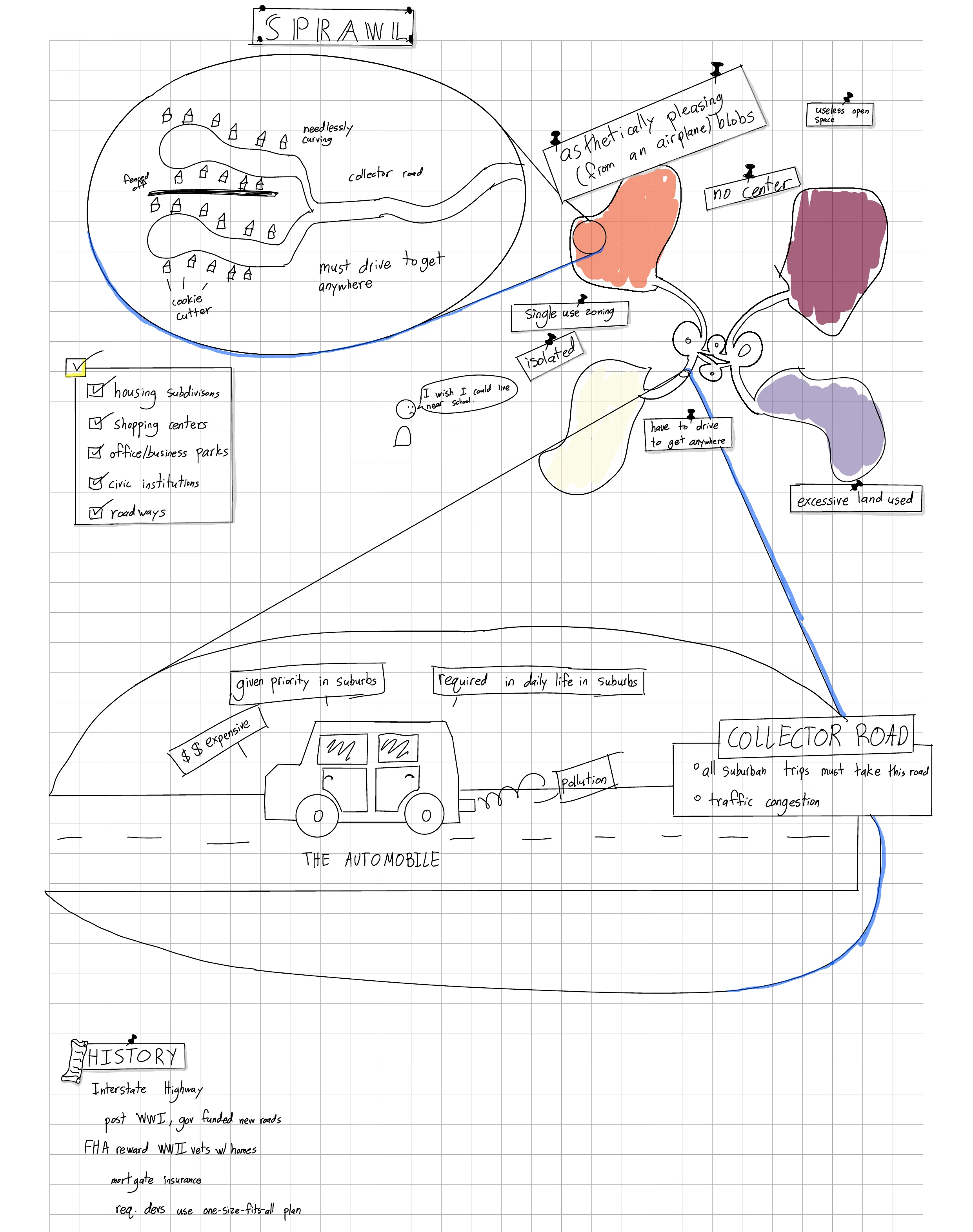
I really like this sketchnote. This was when it all clicked. The sketch of suburban sprawl with frames to show the key points accompanied by further illustrations all works really well together.
The history of sprawl on the bottom right is not amazing. It gets the job done, but there is probably a better way. However, I do like the scroll I drew.
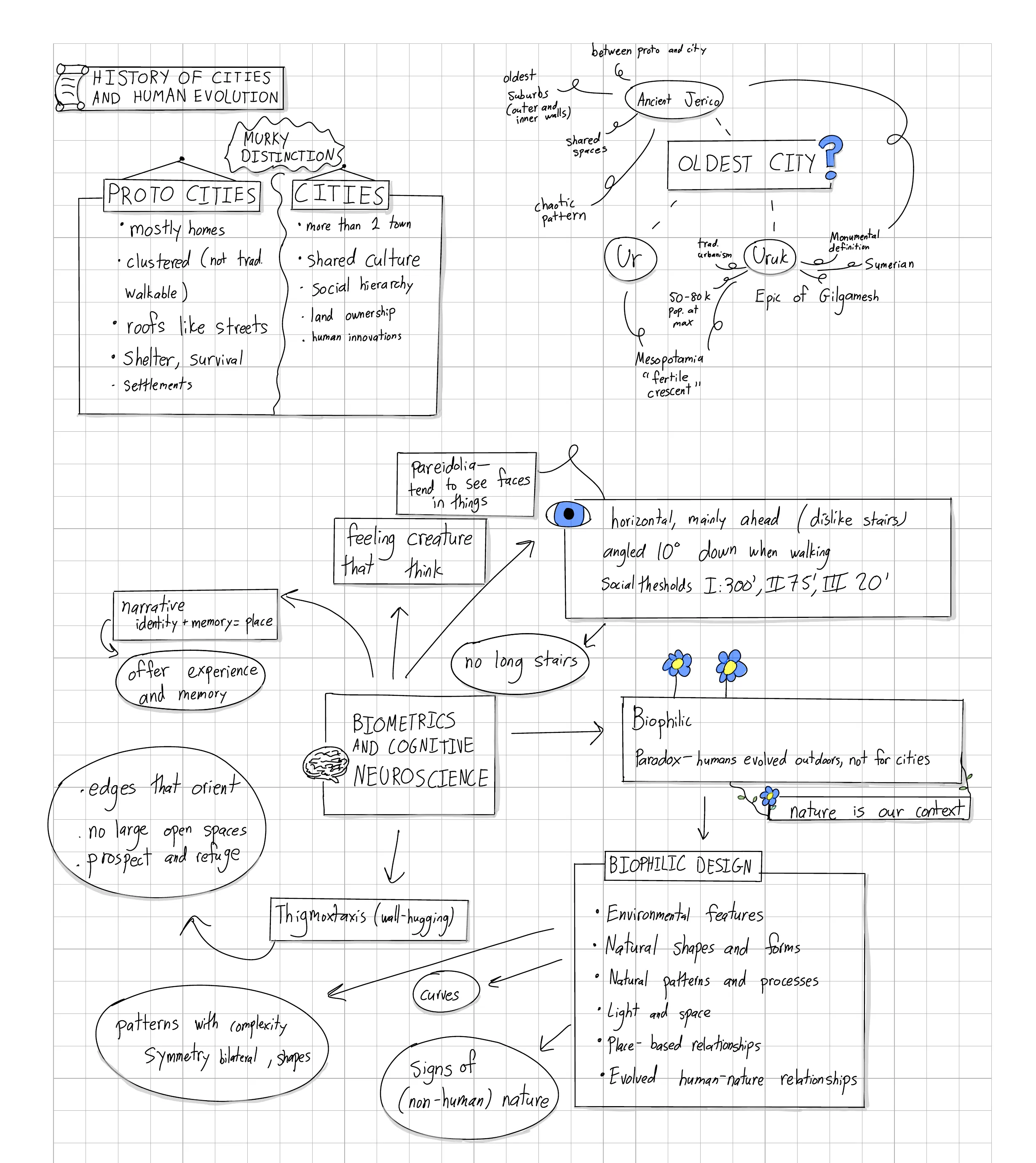
This sketchnote has a lot going on, but I think it works really well. Color really brightens up the page and highlights the main points.
You can also notice my use of shading. I really enjoy giving things shadows. It really makes the whole note look a lot better. Just do not go overboard. Additionally, I save shadows for the end of the note. Sometimes I will save adding shadows as a sort of review. It’s a relaxing process that helps me go over the material and the connections once more.
I have also shown how these ideas are connect with the use of arrows.
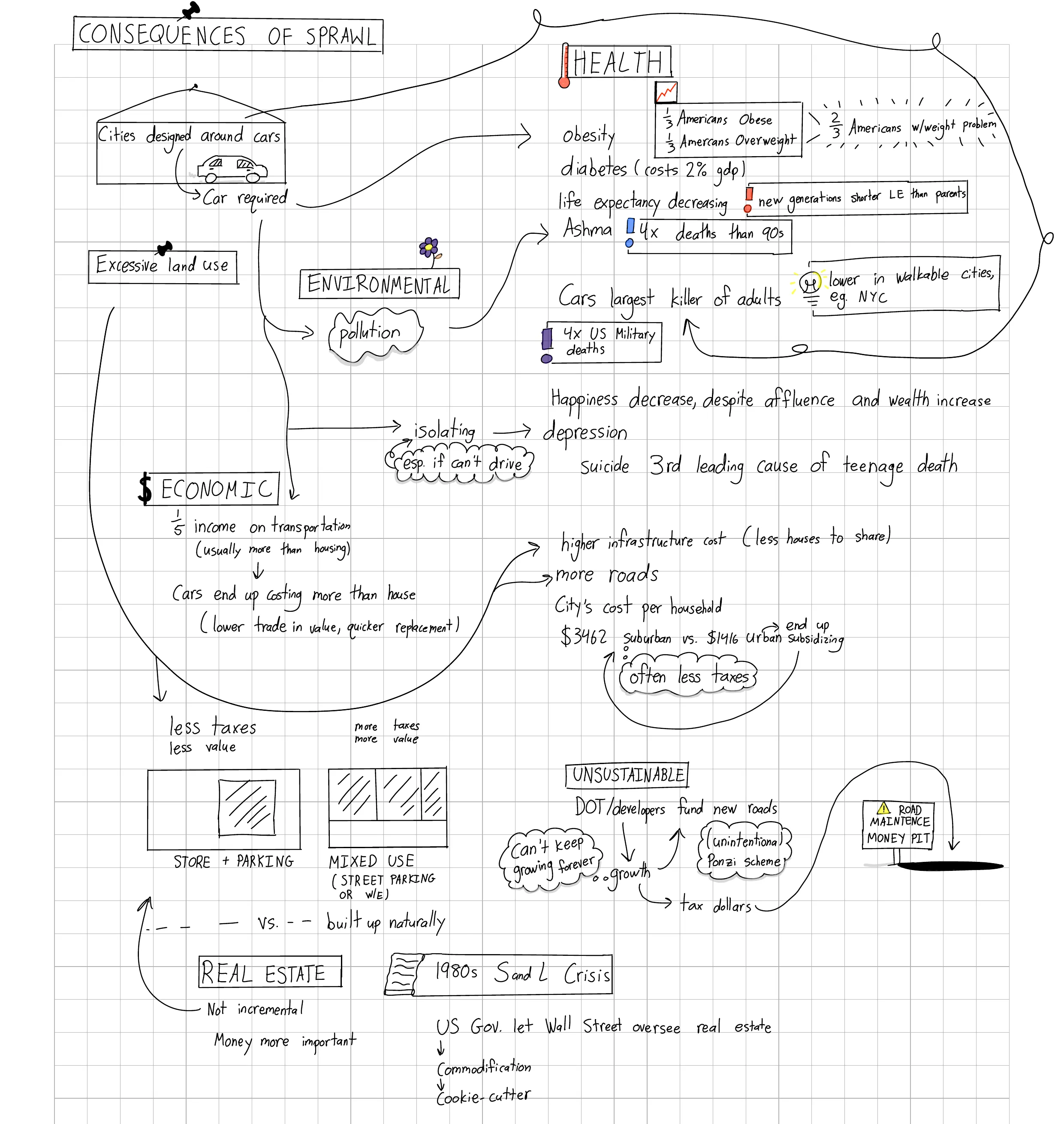
This is another sketchnote that I really like. The topic, The Consequences of Sprawl, is perfect for having many connected ideas. Each main point is separated by a frame but connected to see how all these consequences relate to one another.
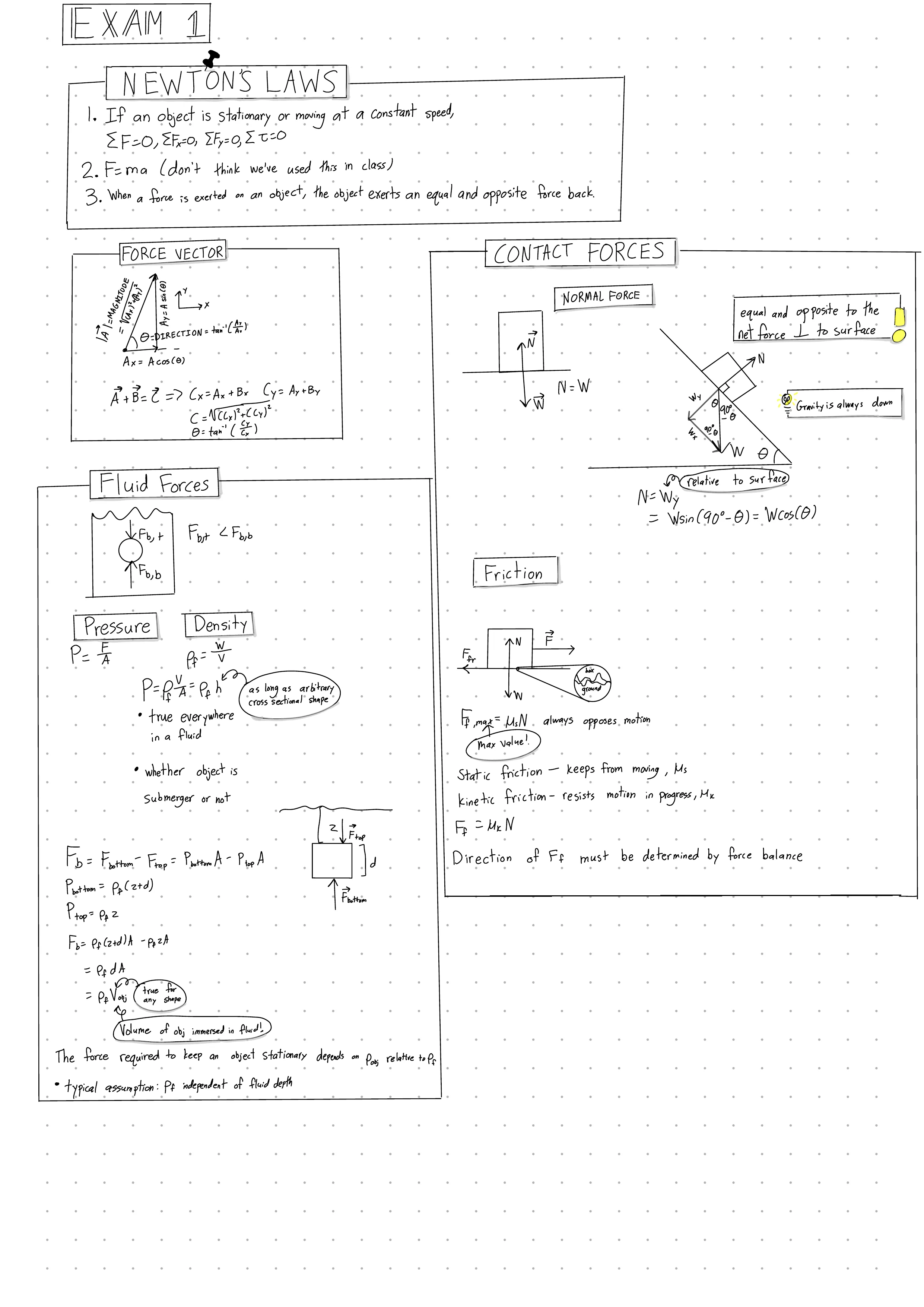
This is one of my physics review sketchnotes. You can see some elements of sketchnoting in use. Frames help show how ideas are related to each other. I hope to continue experimenting with sketchnoting techniques for STEM classes.
Conclusion
Overall, I have really enjoyed sketchnoting and will continue using it in the future. While I haven’t quite cracked how to apply it to STEM classes, I will keep at it, and hopefully next semester will have some more STEM examples to show off. I really encourage everyone to use sketchnoting.